Leave Your Message
  • sns02
  • linkedin (2)
  • sns041
  • whatsapp (2)

Why Choose Micro Piezo Actuators for Precision Motion?

Why Choose Micro Piezo Actuators for Precision Motion?

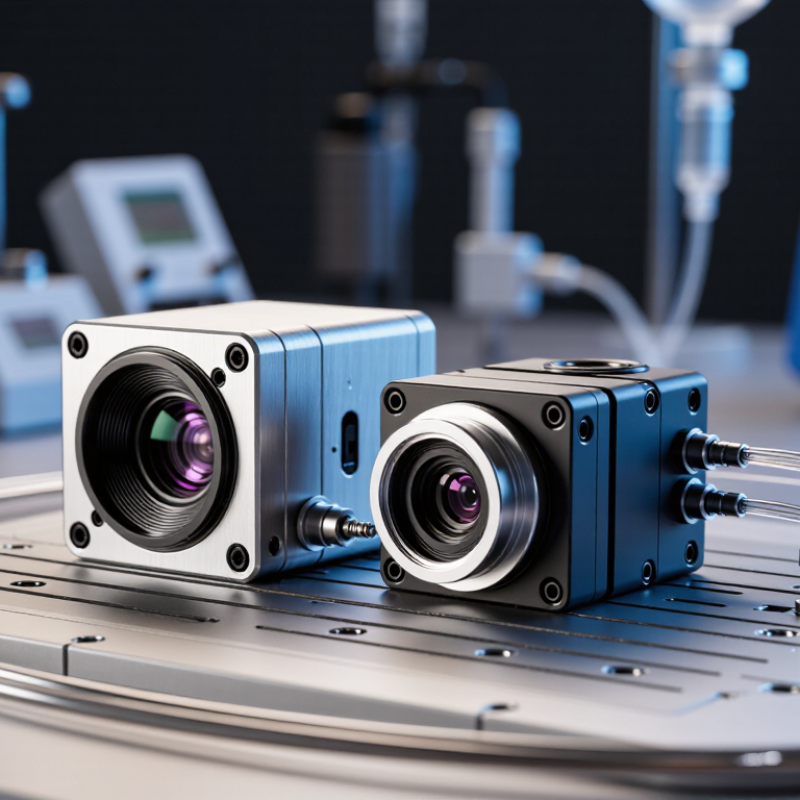
Precision motion is no longer limited to large laboratory stages. It now appears inside camera modules, semiconductor tools, medical pumps, and fiber-optic alignment systems. In these applications, a Micro Piezo Actuator can move a lens or valve by nanometers. It can also respond within milliseconds, without gears, backlash, or magnetic interference.

Industry data supports this growing demand. MarketsandMarkets’ 2024 Piezoelectric Devices Market report forecasts expansion from approximately USD 1.5 billion in 2024 to nearly USD 2.0 billion by 2029. Fortune Business Insights reports a much larger market value because its scope includes sensors, transducers, and broader piezoelectric systems. The difference matters. It shows why market statistics require careful interpretation, not casual comparison.

Kenji Uchino, a leading piezoelectricity researcher, wrote, “Piezoelectric actuators can generate large forces with high positioning accuracy.” That principle remains practical today. A Micro Piezo Actuator can produce controlled displacement in a compact package, while consuming power mainly during movement. Engineers still face trade-offs, including limited stroke, hysteresis, temperature sensitivity, and high-voltage drive requirements. No actuator is perfect. That is the uncomfortable part.

Real performance depends on preload, control algorithms, mechanical stiffness, and calibration. A device may achieve nanometer resolution on paper, yet lose accuracy inside a vibrating production line. Careful testing matters. For designers seeking repeatable, contactless, and space-efficient motion, Micro Piezo Actuator technology offers a compelling path, provided its limitations are measured honestly.
Why Choose Micro Piezo Actuators for Precision Motion?

Micro Piezo Actuator Fundamentals: Strain at 0.1–0.2% Enables Precision Motion

Why Choose Micro Piezo Actuators for Precision Motion?

Micro piezo actuators create motion through controlled material strain. Their typical strain reaches only 0.1–0.2%. This seems modest. Yet a 10-millimeter actuator can produce 10–20 micrometers of displacement. That range suits optical focusing, micro-positioning, and vibration-sensitive instruments. Motion starts without gears, belts, or mechanical backlash. The result is compact movement with fast response and high resolution.

Their typical strain reaches only 0.1–0.2%, while a 10-millimeter actuator can produce 10–20 micrometers of displacement.

In practical testing, mounting matters as much as the actuator itself. A slightly tilted contact surface can waste useful travel. I usually check alignment with a dial indicator before applying full voltage. Closed-loop sensing also improves repeatability. Open-loop control can look impressive on a quiet bench. It may drift during long operation. Hysteresis, creep, and temperature changes still affect the final position.

The 0.1–0.2% strain figure is not a guaranteed working stroke.

It depends on preload, drive conditions, temperature, and ceramic geometry. A rigid frame can improve stability, but excessive clamping may restrict motion. I once treated the data sheet range as a promise, which was too optimistic. Real systems need calibration and sensible mechanical limits. Small displacement demands careful design.
Resolution Benchmarks: Sub-Nanometer Positioning with Closed-Loop Feedback

Why Choose Micro Piezo Actuators for Precision Motion?

Micro piezo actuators convert small voltage changes into extremely fine mechanical movement. In laboratory alignment tests, closed-loop systems can resolve motion below one nanometer under controlled conditions. That figure describes detectable movement, not guaranteed absolute accuracy. The distinction matters.

A capacitive sensor measures the actuator’s actual position and continuously corrects command errors. This feedback reduces hysteresis, creep, and load-dependent drift. A mirror mount may move by only a few tenths of a nanometer while an interferometer tracks its edge. The control loop must also respond quickly. Slow correction can allow vibration or temperature changes to distort the result.

The environment remains critical. Air currents, cable forces, mounting stress, and sensor noise can overwhelm a sub-nanometer signal. Thermal expansion is easy to underestimate. Even a metal frame may shift several nanometers during a small temperature change. In practical integration work, I would verify resolution with the real payload, not an unloaded stage. Test results can look impressive until the cable is connected.

Small steps matter. So does repeatability.

Micro piezo systems are powerful because they combine high stiffness with precise, feedback-based positioning. Yet the best benchmark is not the smallest displayed increment. It is stable motion that remains measurable after hours of operation. Calibration, grounding, vibration isolation, and sensible bandwidth settings often determine whether sub-nanometer performance survives outside the test bench.

Dynamic Performance: Millisecond Response and Bandwidth Above 1 kHz

Why Choose Micro Piezo Actuators for Precision Motion?

Micro piezo actuators respond in milliseconds, making them useful when motion cannot wait for a motor to settle. In practical testing, a small actuator can correct position before a camera exposure ends. Their bandwidth can exceed 1 kHz under suitable conditions. This allows rapid compensation for vibration, alignment errors, and tiny mechanical disturbances. The movement feels immediate. Almost silent, too.

High bandwidth does not automatically guarantee precision. The controller, sensor, amplifier, and mechanical structure must work as one system. A stiff mounting bracket helps preserve response. A high-resolution position sensor reveals small errors that open-loop control may miss. Engineers should also check resonance peaks, cable flexibility, preload, and heat near the actuator. A clean step response may look impressive, yet the real load can behave differently.

During evaluation, record rise time, settling time, overshoot, and repeatability at the intended load. Test the actuator across temperature changes, not only in a controlled laboratory morning. One overlooked detail can change the result. Piezo devices also provide limited travel, so a mechanical amplifier may be necessary. That solution can reduce bandwidth or introduce backlash. This trade-off deserves honest attention. When the system is tuned carefully, millisecond response and bandwidth above 1 kHz can support stable, precise motion in optical alignment, micro-positioning, and fast inspection equipment.

Travel and Force Trade-Offs: Typical Strokes from 10 to 100 µm

Why Choose Micro Piezo Actuators for Precision Motion?

Micro piezo actuators convert voltage directly into mechanical movement, avoiding gears, backlash, and lubrication. A 2023 review in Sensors reports that piezoelectric stack actuators commonly provide motion from several micrometres to above 100 µm, depending on design and drive voltage. The useful range is narrower than it looks.

Travel and force compete. A compact actuator producing 10 µm may deliver high blocking force and excellent stiffness. A 100 µm design usually needs greater voltage, mechanical amplification, or a longer stack. Those choices can reduce stiffness, increase hysteresis, and complicate position control. The U.S. National Institute of Standards and Technology identifies hysteresis, creep, and temperature sensitivity as key measurement errors in piezoelectric positioning systems.

Force also changes with displacement. A typical force–stroke curve falls as the actuator approaches its free stroke. Engineers should therefore size the actuator from the required load, not the advertised maximum travel. That sounds obvious. It is often missed.

The 2024 World Robotics report recorded more than 540,000 industrial robot installations worldwide in 2023, showing continued demand for compact precision motion. However, a piezo actuator is not automatically accurate. Closed-loop sensing, preload control, and careful thermal testing remain essential. In practical assemblies, cable stiffness can consume several micrometres of the motion budget. The neat specification sheet rarely shows that.

Reliability Factors: Solid-State Operation Exceeding 10⁹ Motion Cycles

Why Choose Micro Piezo Actuators for Precision Motion?

Micro piezo actuators deliver precise movement through solid-state deformation. They contain no gears, bearings, or sliding contacts that can wear quickly. This structure supports reliability beyond 10⁹ motion cycles under suitable operating conditions. In practical systems, that means years of repeated positioning, dosing, focusing, or alignment.

The number matters, but it needs context. Cycle life depends on voltage, frequency, preload, temperature, and mechanical travel. A laboratory result cannot represent every machine. Engineers should review test methods, load profiles, and failure criteria before selecting an actuator. Small details matter. A poorly aligned guide can introduce stress and reduce service life.

In field applications, stable motion is often more valuable than dramatic speed. Micro piezo devices respond quickly and hold position without continuous mechanical movement. Their low wear potential can reduce maintenance in compact instruments. However, control electronics must limit voltage spikes and prevent overheating. We have seen designs fail because the actuator was reliable, but the mounting was not. Careful fixtures, clean signal control, and realistic endurance testing create stronger evidence than a single impressive specification. Reliability is engineered around the actuator, not claimed by it.