How to Use Micro Piezo Actuator for Precision Positioning Solutions?
Micro Piezo Actuators (MPAs) are revolutionizing precision positioning solutions across various industries. According to a report by MarketsandMarkets, the global piezoelectric actuator market is projected to reach $5.5 billion by 2025, driven by advancements in robotics and automation. MPAs offer exceptional accuracy and fast response times, making them ideal for applications in aerospace and medical devices.
Their ability to operate with micron-level precision makes MPAs invaluable for tasks requiring high stability. However, challenges remain in integration and control. Many current solutions struggle with scaling and power management, highlighting the need for ongoing innovation. In the pursuit of optimization, some applications may overlook the importance of adaptive control systems.
Ultimately, while MPAs demonstrate remarkable capabilities, users must evaluate their potential and limitations critically. Understanding the nuances of these actuators is essential for leveraging their full potential in precision engineering.
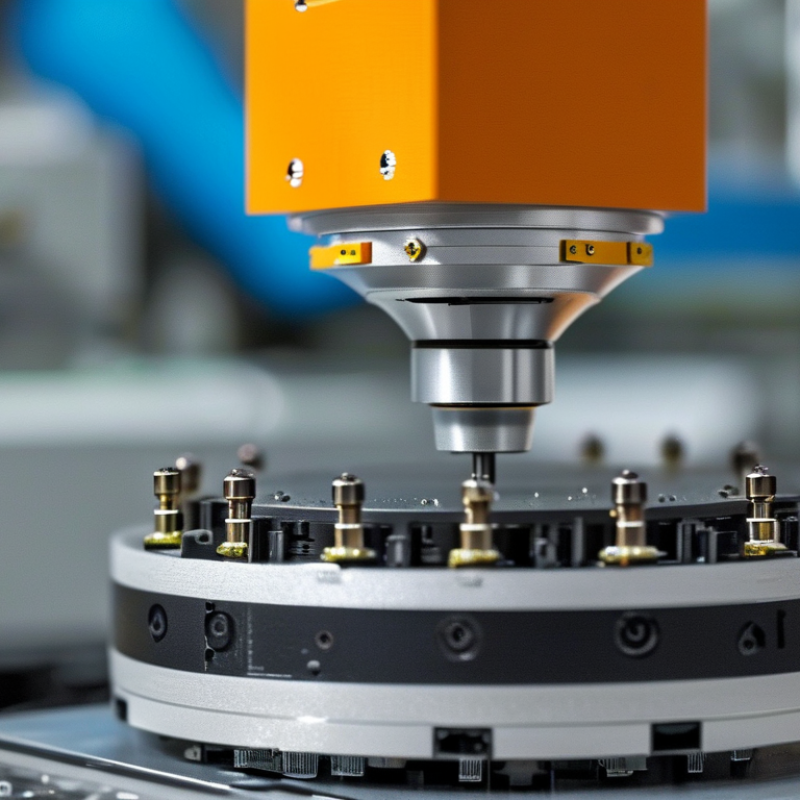
Understanding Micro Piezo Actuators: Principles and Characteristics
Micro piezo actuators are innovative devices used in precision positioning applications. Their operation is based on the piezoelectric effect, where an electric field induces mechanical displacement. This effect allows for highly accurate movements at very small scales. Micro piezo actuators deliver exceptional resolution, making them suitable for tasks requiring minute adjustments.
These actuators typically produce displacements on the nanometer scale. They respond quickly, enabling rapid motion and positioning. The small size of micro piezo actuators allows them to be integrated into compact systems. This characteristic is particularly advantageous in fields like optics, robotics, and biomedical instruments. However, users must be aware of their limitations. For instance, the displacement range can be modest, and sustained applications may lead to heating issues.
When utilizing micro piezo actuators, it’s crucial to consider the external conditions affecting performance. Environmental factors, such as temperature changes, can influence effectiveness. Additionally, the interaction with other components in a system can introduce complexities. These insights provide a pathway to enhanced control over precision applications while highlighting the need for thorough testing and calibration.
Micro Piezo Actuator Performance Comparison
This chart illustrates the performance characteristics of various micro piezo actuators based on their displacement range and response time. The data reflects typical measurements for precision positioning solutions in engineering applications.
Key Applications of Micro Piezo Actuators in Precision Positioning
Micro piezo actuators play a crucial role in precision positioning across numerous industries. These compact devices deliver exceptional movement and accuracy. Their ability to achieve nanometer-level precision makes them ideal for applications such as microscopy, semiconductor manufacturing, and optical systems. According to a recent market analysis, the micro piezo actuator market is expected to grow significantly, driven by the increasing demand for automation and precision in various sectors.
In microscopy, micro piezo actuators enable rapid and accurate adjustments of the optical elements. This enhances image clarity and resolution, critical for groundbreaking research in life sciences. The semiconductor industry relies on these actuators for wafer adjustments during fabrication, where even the slightest positioning error can lead to significant defects. Optical alignment tasks, such as in laser systems, also benefit from the precise control offered by micro piezo actuators.
Tip: When integrating micro piezo actuators, consider the environmental conditions. Temperature fluctuations can impact performance. Always evaluate the compatibility of materials used in the surrounding components.
Despite their advantages, challenges persist. Not all systems are optimized to utilize their full capabilities. Understanding and configuring the drive electronics can be complex for some engineers. Continuous training and testing are vital to ensure effectiveness in high-precision environments.
Advantages of Micro Piezo Actuators Over Traditional Actuation Methods
Micro piezo actuators are becoming popular for precision positioning in various industries. Their significant advantages over traditional actuation methods are evident. These actuators offer exceptional resolution and control, with displacement capabilities reaching up to 100 microns. In comparison, conventional motors often fail to achieve such precision, limiting their application in critical tasks.
One report from the International Society of Automation (ISA) notes that piezoelectric solutions are up to 30% more efficient than traditional solutions. Their compact size also allows for integration into tight spaces where traditional actuators might struggle. This versatility enables designers to create more sophisticated and efficient systems.
Tips: Consider the specific requirements of your application. When selecting actuators, think about the range of motion needed. Also, evaluate power consumption versus precision levels. Balancing these factors can enhance overall system performance.
Despite the advantages, micro piezo actuators require careful calibration. Inconsistent behavior under different loads can pose challenges. Engineers must continuously monitor performance to ensure reliability. It’s important to approach implementation with caution and thorough testing.
Reassess your setup periodically to refine and enhance effectiveness.
Integrating Micro Piezo Actuators into Control Systems for Enhanced Accuracy
Micro piezo actuators are increasingly vital in precision positioning applications. Their integration into control systems can significantly enhance operational accuracy. In recent reports by industry analysts, micro piezo actuators have been shown to achieve positioning resolutions of up to 10 nanometers. This level of precision is essential in sectors such as semiconductor manufacturing, where even the smallest deviation can lead to substantial losses.
Implementing micro piezo actuators requires careful consideration of control algorithms. Integrating advanced feedback mechanisms, such as PID controllers, can enhance responsiveness and stability. Studies indicate that systems utilizing micro piezo technology can improve throughput by up to 30%. However, challenges remain in programming these systems for optimal performance under varying environmental conditions. Engineers often encounter issues with hysteresis and non-linearity, complicating the precision tracking tasks.
Reliability is crucial when deploying these actuators. Engineers must assess wear and tear over time. Using high-quality materials can mitigate some risks. Reports indicate that structured testing can improve actuator lifespan by up to 50%. Continuous monitoring and adapting control strategies based on performance data can further enhance long-term reliability. Emphasizing the importance of a
structured approach ensures these systems meet the high standards required in precision industries.
Future Trends in Micro Piezo Technology and Market Projections
The future of micro piezo technology looks promising as industries increasingly demand precision and efficiency. A recent market report predicts a compound annual growth rate (CAGR) of 12% for micro actuators over the next five years. This growth suggests an expanding reliance on micro piezo solutions in sectors like robotics and medical devices. The ability to achieve micro-level movements with high accuracy makes these actuators ideal for applications such as surgical instruments and optical systems.
Moreover, advancements in materials science are enabling better performance and functionality. For instance, researchers are exploring new piezoelectric materials that enhance actuation speed and energy efficiency. This innovation could lead to miniaturization in devices, where smaller size does not compromise performance. However, the integration of micro piezo technology also presents challenges. Issues such as heat management and actuation limits must be addressed effectively. Stakeholders need to consider these factors to fully realize the potential of micro piezo actuators in future applications.
As the market evolves, increased competition will drive the need for higher quality and reliability. Industry experts stress the importance of continual research and development in this field. Understanding the limitations and finding ways to overcome them will be crucial. Moving forward, the balance between innovation and practical application will shape the trajectory of micro piezo technology.