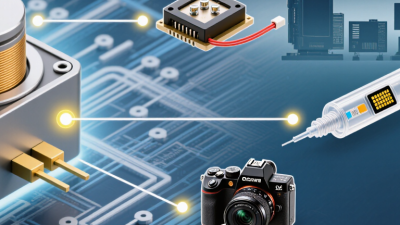
Choosing the right motion technology often begins with one practical question: how precisely must the mechanism move? A Piezoceramic Actuator offers an answer when microscopic displacement, rapid response, and repeatable positioning matter. It expands or contracts when voltage is applied, producing controlled motion without gears, lubricants, or rotating parts. That compact structure can guide optical lenses, semiconductor stages, medical instruments, and precision valves.
Professor Kenji Uchino, a leading authority on piezoelectric materials, explains the principle clearly: “Piezoelectric actuators convert electrical energy into mechanical displacement.” The sentence is simple. The engineering is not. Designers must consider preload, hysteresis, creep, voltage limits, thermal drift, and the quality of the control system. A laboratory stage may move only a few micrometres, yet vibration, cable stiffness, or poor grounding can affect its final position.
The real advantage appears in demanding environments. A Piezoceramic Actuator can react within milliseconds and resolve motion at nanometre scales under suitable feedback control. It also consumes little steady-state power while holding position. Still, piezo technology is not automatically the best choice. Its travel is limited, and open-loop accuracy can decline over time. That weakness deserves attention. With a suitable amplifier, sensor, mechanical guide, and calibrated controller, however, the actuator becomes a powerful tool for precision motion. This article examines where it performs well, where it struggles, and how engineers can select it responsibly.
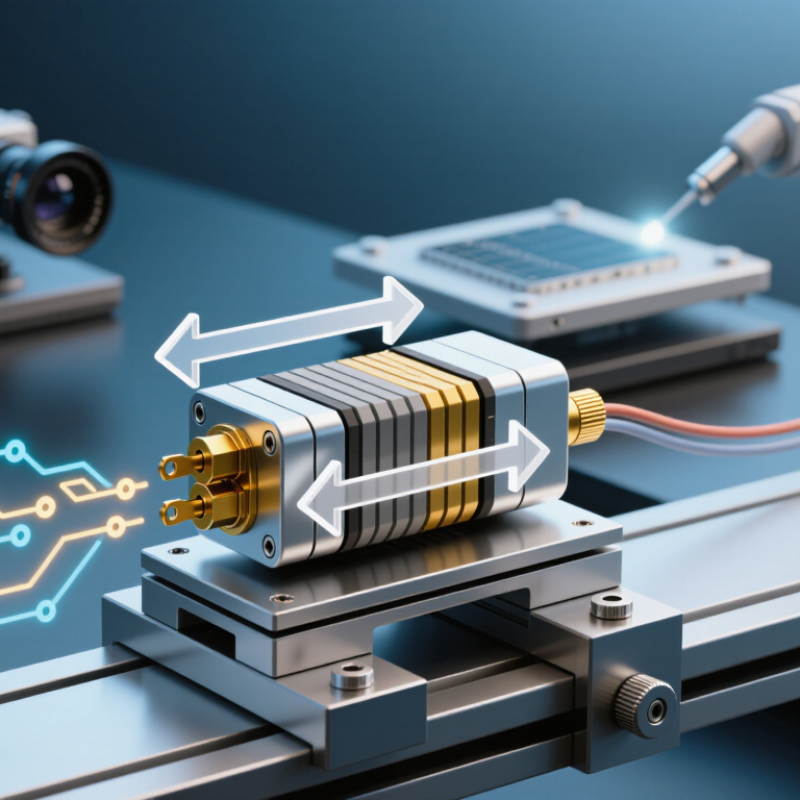
A piezoceramic actuator is a compact device that converts electrical energy into precise mechanical motion. It uses the inverse piezoelectric effect: an applied voltage changes the ceramic’s shape. The movement may be only a few nanometers or micrometers, but it can be controlled with remarkable resolution. A typical actuator contains polarized ceramic layers, electrodes, and a protective housing. When voltage changes, the layers expand or contract.
The motion is fast and produces no traditional sliding friction. That makes piezoceramic actuators useful for focusing optics, positioning semiconductor components, adjusting valves, and controlling laboratory instruments. They can respond within milliseconds, depending on the design and control system. They also hold position with little power after movement stops. This matters in equipment where heat, vibration, or limited space can affect accuracy.
Still, the technology has limits. The travel range is usually small. High-voltage drivers may be necessary. Ceramic elements can also suffer from hysteresis, creep, and reduced performance under unsuitable loads. Careful calibration is essential. In practice, engineers often combine the actuator with a position sensor and closed-loop feedback. It is not magic. Temperature, mounting stress, and cable layout can change the result. A well-designed system treats those details as part of the actuator, not as afterthoughts.
Why Choose a Piezoceramic Actuator for Precision Motion?
How Piezoceramic Actuators Generate Precise Motion
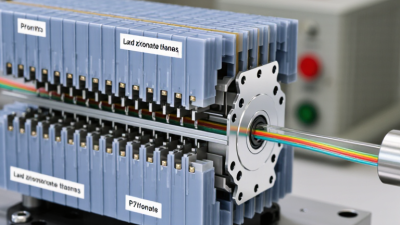
Piezoceramic actuators create motion through the inverse piezoelectric effect. An applied voltage changes the ceramic’s internal polarization. The material expands or contracts along a controlled axis. In a multilayer stack, these tiny movements accumulate into useful displacement. Typical travel ranges from several micrometers to tens of micrometers, while blocked force can reach hundreds of newtons, according to technical reviews published in Actuators and IEEE publications.
The motion is fast because the ceramic has low moving mass. Response times can reach the microsecond range in properly designed systems. A controller usually combines the actuator with a position sensor. Capacitive and strain-gauge feedback can support nanometer-scale positioning. Closed-loop control also corrects creep and hysteresis. These effects are real.
A 2024 industry analysis from Grand View Research reported continued growth in the global piezoelectric devices market, driven partly by semiconductor equipment, medical instruments, and precision manufacturing. However, market growth does not remove engineering limits. Piezoceramics need high-voltage drive electronics and careful preload design. Temperature can shift performance. The voltage-to-motion relationship is not perfectly linear. In practical testing, cable stiffness, mounting stress, and sensor noise may reduce the expected accuracy. That is why experienced engineers calibrate the complete motion stage, not only the ceramic element.
A piezoceramic actuator converts an applied voltage into mechanical strain through the piezoelectric effect. This idealized linear response uses a nominal displacement coefficient of approximately 40 nm/V, showing how a 0–100 V drive can produce about 0–4 µm of motion. Actual displacement may vary because of preload, hysteresis, creep, temperature, and actuator construction.
Precision motion often depends on movements smaller than a human hair. Piezoceramic actuators create controlled displacement through the deformation of ceramic material under voltage. Their response is extremely fast, making them useful for optical alignment, microscopy, semiconductor inspection, and vibration control.
The most important advantage is high positioning resolution. With a suitable controller and sensor, motion can reach the nanometer range. These actuators also provide high stiffness, low mechanical wear, and no traditional gear backlash. Their compact structure fits inside crowded instruments. They generate little heat during static holding, which helps protect temperature-sensitive components. Fast response matters, too. A system can correct small errors before they become visible.
However, piezoceramic motion is not effortless. Stroke length is usually limited, and hysteresis can reduce accuracy without closed-loop feedback. Careful preload design is necessary. Poor mounting may create unwanted stress or uneven movement.
In practical testing, cable flexibility can also disturb measurements. That detail is easy to overlook. Engineers should match the actuator, amplifier, sensor, and mechanical frame as one system. A piezoceramic actuator may deliver excellent precision, but only when its electrical and mechanical conditions remain controlled. This is where many early designs need more reflection.
Piezoceramic actuators convert electrical voltage into small, controlled mechanical movement. Their nanometer-level resolution makes them valuable in optical alignment, micropositioning, and vibration control. They respond quickly and generate useful force within a compact structure. However, their stroke is usually limited. A design requiring several millimeters of travel may need a mechanical amplifier or a second motion stage. In practical testing, mounting stiffness often matters as much as actuator specifications.
Performance depends on voltage range, preload, load mass, and operating frequency. Hysteresis can cause position errors, while creep slowly changes the position after voltage adjustment. Closed-loop feedback improves accuracy, but it adds sensors, wiring, and control complexity. Heat can also affect repeatability, especially during rapid cycling. This is easy to underestimate.
Tips: Use a rigid mounting surface and apply the recommended preload. Keep cables shielded and avoid sudden voltage changes. Test the actuator with the real load, not a simplified dummy. Measure settling time, not only resolution. A small temperature shift may reveal a large positioning error.
Operating limitations deserve equal attention. Piezoceramic materials can be brittle, and excessive bending or shock may cause damage. Resonance can amplify motion and create unwanted noise. Electrical insulation must match the working environment. I have seen promising prototypes lose accuracy because the support frame flexed. The actuator was not the only problem. Careful calibration, mechanical analysis, and realistic endurance testing provide more reliable results than impressive laboratory numbers.
Selecting the right piezoceramic actuator begins with the motion requirement, not the catalog photo. Define the required travel, force, speed, and positioning resolution. A device offering nanometer resolution may still fail if its stroke is too short. Check the load carefully. Excessive side force can damage the ceramic or reduce repeatability.
In precision stages, I have found that preload and mounting stiffness often matter more than expected. A rigid frame helps transfer motion accurately. However, uneven clamping can create unwanted stress.
Keep it simple. Match the actuator’s voltage range with a suitable driver, and account for its capacitive behavior. Fast movement requires enough current, not only higher voltage.
Open-loop operation can work for stable, repeatable laboratory tasks. Closed-loop feedback is usually safer when temperature, load, or long-term drift changes. Piezoceramic materials show hysteresis and creep, so position errors may appear after a command stops. A displacement sensor can correct much of this behavior. It also increases system cost and integration effort.
I once underestimated cable flexibility during a small-stage test. The actuator performed well, but the wiring introduced measurable motion. That mistake changed my selection checklist.
Review thermal conditions, cable routing, controller compatibility, and emergency limits before final approval. Performance claims should come from measured testing under the actual load, not ideal specifications alone.