Leave Your Message



China’s Micro Piezo Actuator industry is entering a more demanding phase. Miniaturized motion now supports optical modules, medical pumps, autofocus systems, inkjet heads, and semiconductor equipment. Buyers need more than a low unit price. They need repeatable displacement, stable force, low hysteresis, and verified service life.
Mordor Intelligence estimates the global piezoelectric devices market at approximately USD 31.85 billion in 2024. Its forecast suggests growth to about USD 43.32 billion by 2029. However, these figures cover sensors, actuators, and other components. They should not be treated as actuator-only results. Grand View Research also identifies healthcare, automotive, consumer electronics, and industrial automation as important demand sectors. Definitions vary. That is worth remembering.
Dr. Kenji Uchino, a widely recognized piezoelectricity researcher, has stated, “Piezoelectric actuators convert electrical energy into mechanical energy.” This simple principle hides difficult engineering choices. A supplier may offer a compact stack actuator, but its actual performance depends on preload, drive voltage, ceramic composition, and assembly accuracy. Tiny differences matter. A few micrometers can affect optical alignment or dosing accuracy.
This guide examines China’s leading suppliers through practical criteria. These include actuator structure, travel range, blocking force, resonance behavior, cycle testing, customization, documentation, and quality controls. Public certifications help, but they do not replace application testing. Some supplier claims remain difficult to compare. That is an unavoidable weakness in this market. Engineers should request test curves, sample units, and failure data before approving a production partner.
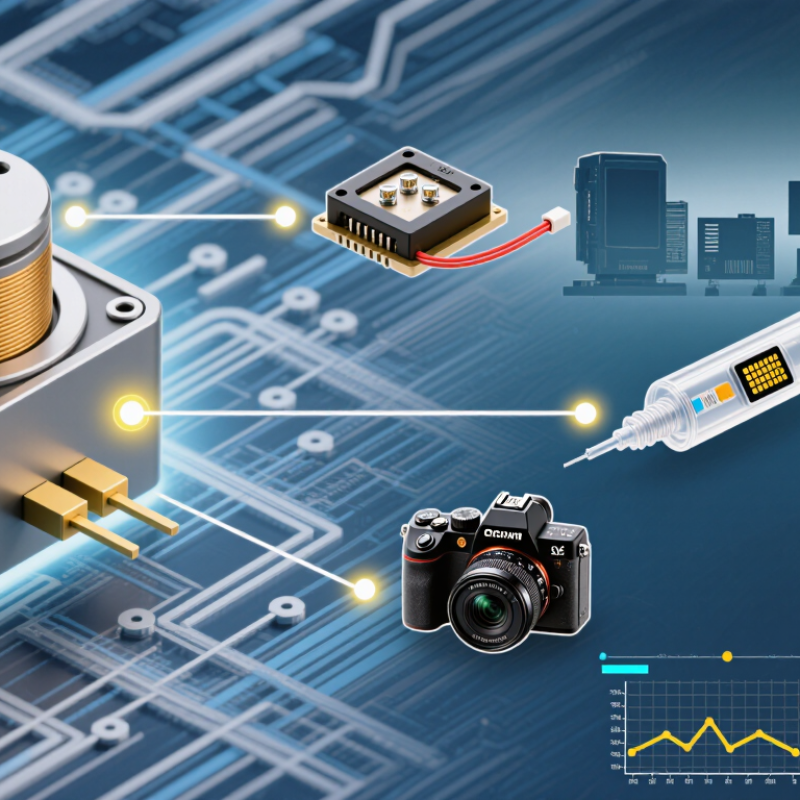
Micro piezo actuators convert electrical voltage into tiny, controlled mechanical movement. Their active element usually contains a multilayer piezoelectric ceramic, internal electrodes, and protective insulation. A voltage changes the ceramic’s dimensions, producing displacement that can position, pulse, clamp, or vibrate a component.
Their movement is small but highly precise. Typical travel ranges extend from nanometers to several micrometers, while response times can reach milliseconds or less. The structure may include a flexure, preload spring, displacement sensor, and ceramic housing. These details affect stiffness, hysteresis, heat generation, and service life. The boundary is not always clean.
A 2024 MarketsandMarkets report estimates the broader piezoelectric devices market will grow from about USD 35 billion in 2023 to more than USD 50 billion by 2028. Grand View Research also identifies medical, semiconductor, automotive, and consumer electronics as important demand areas. In practical use, micro piezo actuators drive inkjet droplets, adjust optical lenses, control microfluidic valves, and position semiconductor stages. Medical systems use them for ultrasonic imaging and precision dosing. Industrial systems demand stable motion under vibration. Consumer products prioritize compact size and low power. Supplier comparisons should examine stroke, blocking force, resonance frequency, drive voltage, insulation, calibration data, and test conditions—not brochure accuracy alone.
Anonymous technical comparison of ten common China-based supplier capability profiles. The table uses industry-typical specification ranges rather than company or brand data. Actual performance depends on actuator geometry, preload, drive electronics, temperature, and testing conditions.
| Profile | Actuator Type | Operating Principle | Typical Structure | Typical Stroke / Displacement | Typical Blocking Force | Typical Drive Voltage | Response Characteristic | Key Applications | Important Selection Criteria |
|---|---|---|---|---|---|---|---|---|---|
| Profile 01 | Multilayer stack actuator | Longitudinal piezoelectric effect; electric-field-induced strain creates axial motion. | Alternating internal ceramic and electrode layers with end terminals and a protective outer coating. | Approximately 5–100 µm, depending on stack length and voltage. | Typically from several hundred newtons to several kilonewtons. | Commonly 30–150 V for multilayer designs. | Sub-millisecond potential | Precision positioning, nanopositioning stages, valve control, optical alignment, and vibration compensation. | Required stroke, preload, insulation resistance, fatigue life, and operating temperature. |
| Profile 02 | Ring stack actuator | Axial expansion or contraction of a piezoelectric ring stack under an applied electric field. | Annular ceramic layers, internal electrodes, central aperture, and compression preload assembly. | Approximately 2–60 µm. | Typically 100 N–2 kN, depending on diameter and stack height. | Commonly 30–150 V. | Fast axial motion | Ultrasonic transducers, precision shutters, micro-pumps, acoustic devices, and lens positioning. | Axial stiffness, radial stress control, aperture dimensions, and mounting method. |
| Profile 03 | Bender actuator | Differential strain between bonded piezoelectric layers produces bending displacement. | Single-layer or bimorph ceramic bonded to a metal shim or another piezoelectric layer. | Approximately 0.1–2 mm at the free end, depending on length and load. | Usually lower than stack actuators; commonly from millinewtons to a few newtons. | Often 30–200 V, depending on construction. | Large motion / low load | Micro-grippers, miniature pumps, tactile mechanisms, optical switches, and small fluidic valves. | Free-end displacement, resonant frequency, blocking force, humidity protection, and bonding reliability. |
| Profile 04 | Tube actuator | Radial, longitudinal, or shear deformation of a polarized piezoelectric tube. | Hollow ceramic tube with segmented or continuous electrodes on inner and outer surfaces. | Typically tens of micrometres radially or axially; angle-dependent motion is possible. | Generally low to moderate, often below 100 N for miniature versions. | Commonly 30–200 V. | Multi-axis capability | Fiber alignment, scanning probe systems, micro-positioning, ink control, and miniature optical systems. | Electrode segmentation, radial uniformity, concentricity, insulation, and thermal stability. |
| Profile 05 | Shear-mode actuator | Electric-field-induced shear strain produces lateral displacement. | Thin polarized ceramic element with electrodes arranged to generate transverse shear motion. | Typically 1–30 µm, with compact envelope dimensions. | Commonly several newtons to tens of newtons. | Often 30–150 V. | High precision | Fine optical adjustment, micro-positioning, piezoelectric relays, and miniature inertial mechanisms. | Shear coefficient, cross-axis sensitivity, preload, hysteresis, and mechanical integration. |
| Profile 06 | Ultrasonic motor actuator | High-frequency traveling or standing waves create friction-driven rotary or linear motion. | Piezoelectric stator, electrode pattern, friction interface, rotor or slider, and preload mechanism. | Mechanical travel is theoretically continuous; positioning resolution can reach the micrometre or sub-micrometre range. | Application-dependent; commonly suitable for low-to-moderate precision loads. | Typically 20–200 V AC at ultrasonic frequency. | Direct drive | Camera lens modules, miniature stages, autofocus systems, medical instruments, and compact robotics. | Operating frequency, friction material, torque or thrust, wear life, noise, and controller compatibility. |
| Profile 07 | Piezoelectric micro-pump actuator | Periodic bending or diaphragm deformation changes chamber volume and drives fluid through check valves or channels. | Piezoelectric disc or plate bonded to a metal diaphragm, pump chamber, inlet, outlet, and valve structure. | Diaphragm displacement commonly ranges from a few micrometres to several tens of micrometres. | Specified mainly by pressure head and flow rate rather than blocking force. | Often 30–200 V, depending on diaphragm design. | Low power potential | Inkjet systems, liquid dosing, cooling circuits, portable medical devices, and analytical instruments. | Flow rate, pressure, chemical compatibility, bubble tolerance, leakage rate, and cycle life. |
| Profile 08 | Micro-valve actuator | Piezoelectric displacement opens, closes, or modulates a fluid or gas flow path. | Stack, bender, or diaphragm actuator coupled to a poppet, membrane, nozzle, or sealing seat. | Valve lift commonly ranges from approximately 5–150 µm. | Defined by sealing force and pressure differential; commonly suitable for low-pressure microfluidic control. | Typically 30–150 V. | Rapid switching | Gas control, microfluidics, laboratory automation, fuel metering, and pneumatic instrumentation. | Leakage, response time, media compatibility, pressure range, seal material, and normally-open or normally-closed configuration. |
| Profile 09 | Micro-gripper actuator | Piezoelectric bending or amplified motion moves one or more compliant gripping jaws. | Bimorph, stack, or flexure-amplified actuator integrated with miniature jaws and a mechanical frame. | Jaw travel commonly ranges from 10–500 µm. | Typical gripping force ranges from several millinewtons to several newtons. | Commonly 30–200 V. | Fine force control | Micromanipulation, semiconductor handling, fiber assembly, biological research, and micro-assembly. | Jaw parallelism, gripping force, repeatability, particle generation, compliance, and control resolution. |
| Profile 10 | Precision positioning module | A piezoelectric actuator drives a flexure, stage, or lever mechanism for controlled nanometre-scale positioning. | Piezo stack or shear element integrated with flexure guides, position sensor, preload, and controller interface. | Typically 10–300 µm travel; closed-loop systems may provide nanometre-level resolution. | Commonly 10 N–1 kN, depending on stage size and actuator type. | Often 30–150 V DC or controlled high-voltage drive. | Closed-loop capable | Semiconductor inspection, microscopy, laser alignment, optical tables, metrology, and precision manufacturing. | Open-loop hysteresis, creep, sensor type, guiding stiffness, bandwidth, repeatability, and thermal drift. |