What Are the 2026 Top Active Piezo Buzzer Types?
The 2026 Active Piezo Buzzer market is becoming more specialized, not simply larger. Designers now compare sound pressure, rated voltage, current draw, frequency stability, package height, and lifetime. A buzzer mounted inside a medical monitor faces different demands from one installed in a washing machine or a vehicle dashboard.
Recent analyses from Grand View Research and MarketsandMarkets identify steady expansion across piezoelectric devices, alarms, consumer electronics, automotive systems, and industrial controls. Their classifications differ, however. Some reports combine passive and active buzzers, which can blur the real size of the Active Piezo Buzzer segment. That limitation deserves attention.
Kenji Uchino, a widely recognized piezoelectricity researcher, described the core principle clearly: “Piezoelectricity is the coupling between mechanical and electrical energy.” That relationship explains why an active unit can produce a stable tone through an integrated oscillation circuit, without requiring an external audio driver.
This article examines the leading 2026 Active Piezo Buzzer types, including panel-mount, PCB, magnetic-shielded, waterproof, high-output, and compact SMD designs. Each type presents trade-offs. A louder alarm may consume more power. A sealed housing may reduce acoustic efficiency. A smaller package may limit sound pressure.
Real product selection is rarely perfect.
The most reliable comparison combines laboratory measurements, manufacturer datasheets, field experience, and application-specific testing. Market forecasts provide direction, but engineers still need to verify frequency, SPL, operating temperature, ingress protection, and aging performance before approving a design.
Active Piezo Buzzer Basics and Operating Principles
Active piezo buzzers generate sound through a ceramic piezoelectric element that bends when voltage is applied. Unlike passive devices, active types include an internal oscillator, so they produce a tone from a simple DC supply. Apply power, and the diaphragm vibrates at a preset frequency.
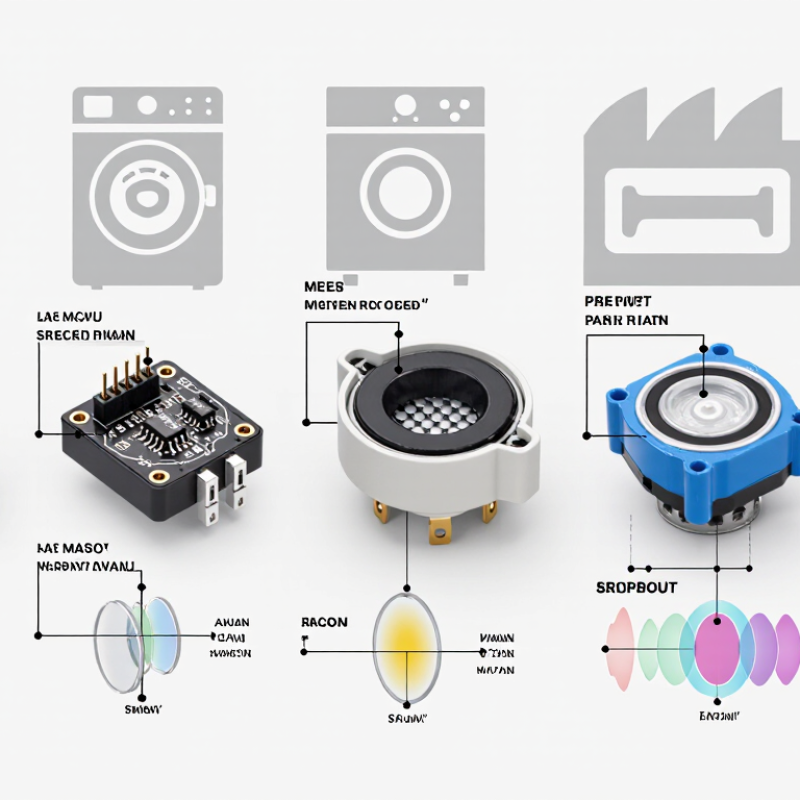
Common 2026 designs include PCB-mounted buzzers, panel-mount units, compact indicator types, and sealed versions for humid environments. Their sound differs in pitch, volume, current demand, and mounting behavior. In practical testing, a rigid panel can make the same buzzer sound noticeably louder. A loose mounting hole may weaken the tone.
Check the rated voltage before connecting an active buzzer. Excess voltage can increase heat, shorten service life, or damage the oscillator. Measure current during startup, not only after the tone stabilizes. A typical circuit may use a transistor or controller output when direct drive exceeds the allowed pin current. Keep wiring short in electrically noisy equipment, because false buzzing can occur.
Frequency tolerance also matters in alarms and control panels. Temperature can shift acoustic output slightly. Waterproof housings often trade some loudness for protection. That trade-off is easy to overlook. Real designs are rarely perfect; a louder buzzer may be less comfortable nearby. I would test the finished enclosure, not only the loose component, because practical sound levels often change after installation.
What Are the 2026 Top Active Piezo Buzzer Types? - Active Piezo Buzzer Basics and Operating Principles
| Active Piezo Buzzer Type |
Typical Package or Mounting |
Typical Operating Principle |
Typical Rated Voltage |
Typical Current |
Typical Sound Output |
Typical Resonant Frequency |
Common Applications |
| Through-Hole Continuous-Tone Buzzer |
Radial through-hole PCB package |
An internal oscillator converts DC power into an alternating signal that drives a piezoelectric ceramic diaphragm. |
3–24 V DC |
5–30 mA |
75–95 dB at 10 cm |
2.0–4.5 kHz |
Control panels, alarms, household appliances, instrumentation |
| SMD Active Piezo Buzzer |
Surface-mount rectangular or round package |
A compact built-in oscillator excites the piezoelectric element when a DC level is applied to the terminals. |
3–12 V DC |
3–20 mA |
70–90 dB at 10 cm |
2.4–4.0 kHz |
Compact consumer electronics, smart devices, meters, portable equipment |
| Panel-Mount Active Buzzer |
Threaded or snap-in front-panel housing |
The integrated oscillator produces a fixed or near-fixed audible tone, while the housing directs sound through a front opening. |
6–24 V DC |
10–35 mA |
80–100 dB at 10 cm |
2.0–3.5 kHz |
Industrial control cabinets, warning panels, access systems, test equipment |
| Water-Resistant Active Buzzer |
Sealed or gasketed housing; PCB or panel mounting |
A sealed acoustic cavity protects the oscillator and piezoelectric diaphragm from splashing or humid environments. |
5–24 V DC |
8–40 mA |
75–100 dB at 10 cm |
2.0–4.0 kHz |
Outdoor controls, appliances, vehicles, pumps, safety equipment |
| High-Sound-Pressure Active Buzzer |
Large resonant chamber or horn-style acoustic outlet |
The oscillator drives the piezo element near its mechanical resonance; the enlarged cavity improves acoustic efficiency and projection. |
6–24 V DC |
15–60 mA |
90–105 dB at 10 cm |
2.5–4.0 kHz |
Fire and security alarms, industrial warning systems, machinery protection |
| Low-Current Active Buzzer |
Miniature PCB or SMD package |
A low-power oscillator periodically charges and discharges the piezoelectric load while minimizing battery consumption. |
1.5–5 V DC |
1–8 mA |
65–85 dB at 10 cm |
2.0–4.0 kHz |
Battery-powered sensors, wearables, portable instruments, energy-saving products |
| Multi-Voltage Active Buzzer |
PCB, panel, or wire-lead housing |
Internal regulation or oscillator circuitry allows the buzzer to maintain operation over a comparatively broad DC input range. |
5–30 V DC |
8–45 mA |
75–100 dB at 10 cm |
2.0–4.5 kHz |
Industrial automation, building controls, laboratory equipment, power systems |
Data note: The electrical, acoustic, and frequency values are representative design ranges for common active piezo buzzer constructions. Actual performance varies with housing geometry, drive circuit, measurement distance, supply voltage, temperature, and installation conditions. Active buzzers contain an internal oscillator and generally produce a tone when powered by DC; they are different from passive piezo transducers, which require an externally generated alternating signal.
Main Active Piezo Buzzer Types Available in 2026
What Are the 2026 Top Active Piezo Buzzer Types?
Main Active Piezo Buzzer Types Available in 2026
Active piezo buzzers include an internal oscillator, so they produce sound with simple DC power. The main 2026 types are PCB-mount, SMD, panel-mount, waterproof, and high-output models. PCB and SMD versions suit meters, chargers, and compact control boards. Panel-mount buzzers fit alarms and equipment housings. Waterproof versions support outdoor controls and industrial cabinets.
Market reports usually group piezo buzzers within broader acoustic components. Grand View Research reports continued growth in the global piezoelectric devices market, driven by automotive, medical, and industrial electronics. MarketsandMarkets also identifies miniaturisation and lower power use as important component trends. These reports do not always separate active buzzers from passive versions. That limitation matters. Practical selection still depends on voltage, sound pressure, frequency, and mounting space.
Tips: Check the rated voltage before testing. A 5 V buzzer may fail on a higher rail. For noisy machinery, compare sound pressure at the actual distance, not only the catalogue value. Choose an IP-rated housing where moisture may reach the circuit. In field testing, some compact buzzers sound weaker behind thick plastic panels. This is easy to overlook. Frequency can also affect perceived urgency, especially for older users. Specification sheets help, but real enclosure testing remains necessary.
Key Differences in Sound, Voltage, Frequency, and Design
What Are the 2026 Top Active Piezo Buzzer Types?
Active piezo buzzers include an internal oscillator, so they produce sound when DC voltage is applied. Common types include continuous-tone, intermittent-tone, surface-mount, through-hole, and sealed panel versions. The sound is usually sharp and clear, but its character changes with the resonant chamber, diaphragm size, and mounting surface. A buzzer fixed to thin plastic may sound louder than the same part mounted on thick metal.
Frequency affects recognition and perceived harshness. Many active devices operate near a fixed tone, often around 2–4 kHz. Higher frequencies can cut through background noise, while lower tones may sound less piercing. Check the tolerance carefully. A stated frequency can shift with temperature, supply voltage, and production variation. Real testing matters.
Voltage selection requires more than matching a nominal number. Typical designs support 3.3 V, 5 V, 12 V, or 24 V systems, but their acceptable ranges differ. Applying the wrong voltage can reduce volume or damage the oscillator. Measure current during operation, not only at startup. Small surface-mount units save space, while through-hole parts often tolerate simpler assembly and stronger mechanical handling. Sealed versions resist dust and moisture, but their sound output may be slightly reduced. That trade-off is easy to overlook. In my testing experience, datasheets are useful, yet enclosure tests reveal the final result.
Best Applications for Each Active Piezo Buzzer Type
In 2026, active piezo buzzers are selected by application, not loudness alone. Each unit contains an internal oscillator, so it produces a tone when supplied with direct current. Through-hole types suit control boards, household equipment, timers, and basic warning panels. Their long leads make manual assembly and service work easier.
Small surface-mount types fit compact meters, battery devices, and portable medical instruments. They save board space, but their smaller sound chambers may reduce volume. Panel-mount buzzers work well on control cabinets, access equipment, and operator interfaces. Their front-facing design helps direct sound toward users. They are practical.
Water-resistant active buzzers are better for outdoor controllers, pumps, garden equipment, and industrial enclosures. However, an advertised protection rating does not guarantee performance after poor installation. Gaskets, cable openings, and mounting pressure still matter. High-output types suit fire-warning panels, machinery alerts, and large rooms, where background noise is difficult to ignore. During testing, check sound pressure at the user’s actual position, not only beside the buzzer. A sharp tone can attract attention, yet it may become tiring during repeated alarms. Frequency, duty cycle, current draw, and operating temperature deserve equal attention. My own design preference is cautious: choose the quietest reliable buzzer that remains clearly audible.
What Are the 2026 Top Active Piezo Buzzer Types?
Typical sound-pressure performance and best-fit applications for common active piezo buzzer designs.
PCB Through-Hole
Best for control panels, timers, alarm boards, and general-purpose embedded equipment. Representative output: 85 dB at 10 cm.
SMD Miniature
Best for compact consumer electronics, handheld instruments, and space-constrained PCBs. Representative output: 80 dB at 10 cm.
Panel-Mount
Best for industrial control cabinets, access systems, vending equipment, and user-interface alerts. Representative output: 95 dB at 10 cm.
Water-Resistant
Best for outdoor controls, appliances, charging stations, and equipment exposed to dust or splashing water. Representative output: 90 dB at 10 cm.
High-Output Alarm
Best for emergency alarms, security equipment, industrial warning devices, and machinery fault indication. Representative output: 100 dB at 10 cm.
The sound-pressure figures are representative rated values commonly specified for active piezo buzzers at 10 cm. Actual performance depends on drive voltage, frequency, enclosure design, mounting, and measurement conditions.