Leave Your Message
  • sns02
  • linkedin (2)
  • sns041
  • whatsapp (2)

2026 Best Piezo Disc Transducer Manufacturers Suppliers?

Choosing the right supplier matters when a small sensor must deliver stable signals in a demanding product. This 2026 guide examines leading Piezo Disc Transducer manufacturers and suppliers for industrial, medical, automotive, security, and consumer applications. It focuses on practical evidence, not impressive claims alone.

A reliable supplier should provide clear datasheets, resonance tolerances, capacitance ranges, sensitivity values, and operating temperature limits. Engineers should also review electrode materials, ceramic thickness, disc diameter, adhesive compatibility, and packaging options. A 27 mm disc may suit an alarm prototype, while a smaller element may fit a compact vibration sensor. Details like these affect performance.

Real supplier evaluation requires more than comparing unit prices. Request samples and test them under the intended mounting conditions. Confirm batch consistency, inspection procedures, traceability, and production capacity. ISO certifications can support confidence, but they do not replace independent testing. Ask about lead times, minimum order quantities, customization, and technical support.

No manufacturer is perfect.

Some suppliers publish excellent specifications but respond slowly. Others offer fast communication but limited engineering documentation. That difference can become expensive during certification or mass production. This review therefore considers experience, product quality, application knowledge, supply reliability, and customer feedback. It also recognizes uncertainty, because rankings may change with capacity, regional service, and new product development. Readers should verify current certificates, pricing, and availability before making a final purchasing decision.
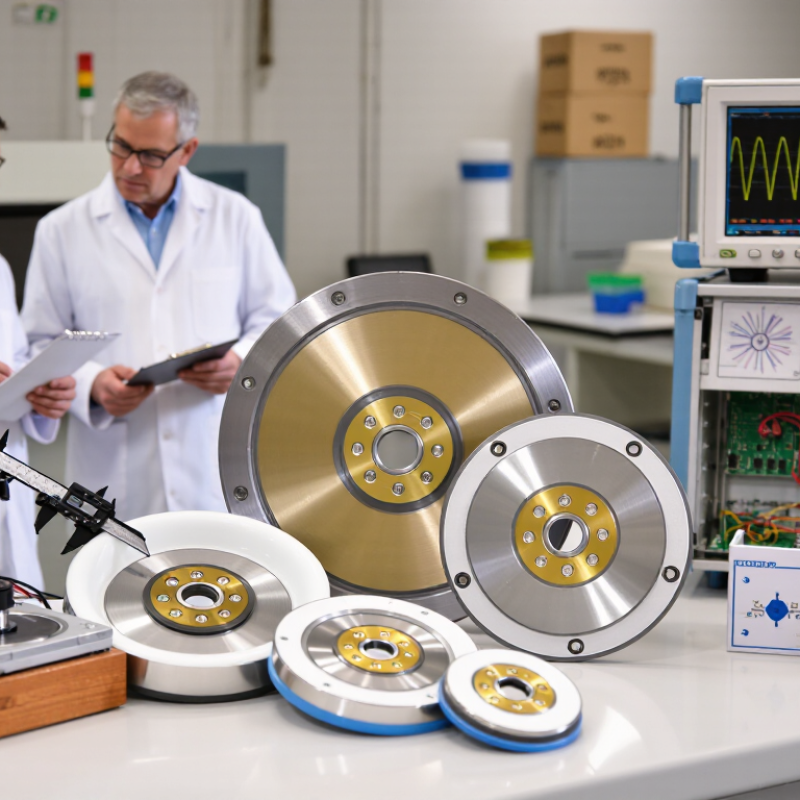
2026 Best Piezo Disc Transducer Manufacturers Suppliers?

Understanding Piezo Disc Transducers and Their Common Applications

Piezo disc transducers use a ceramic element bonded to a metal diaphragm. When voltage is applied, the ceramic flexes and produces sound or vibration. The reverse can also happen: mechanical pressure on the disc creates a small electrical signal. This dual behavior makes the component useful in both output and sensing roles. A disc can be only a few millimeters wide, yet still generate a clear beep in a compact device. Small parts, real impact.

Common applications include alarms, appliance alerts, ultrasonic distance sensors, and vibration detectors. In a countertop appliance, a piezo disc may provide a short confirmation tone without a bulky speaker. In a sensor, it can detect changes in vibration or help transmit ultrasonic pulses.

Performance depends on more than disc diameter. Drive voltage, mounting method, housing shape, and the surrounding air space all affect sound output. A tightly clamped disc may behave differently from one fixed around its edge, so testing it in the finished enclosure matters.

When evaluating a transducer, check its resonant frequency, capacitance, operating temperature, and mechanical limits against the intended circuit. Also consider whether the device needs a loud tone, a stable sensor signal, or low power use; these goals can conflict. Datasheet values are useful, but they do not perfectly predict performance in every assembly. A simple bench test can reveal unexpected weak spots. That step is easy to skip, and sometimes regrettably so.
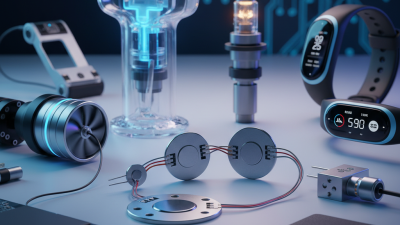
Key Specifications for Comparing Piezo Disc Transducers

When comparing piezo disc transducers, start with the dimensions and electrical data that shape performance. Disc diameter and ceramic thickness affect resonance, while capacitance and impedance help determine whether a driver can operate the disc efficiently. Check the stated resonant frequency and tolerance, not just a nominal figure. Small differences matter. A disc intended for a narrow tone may not suit a design that needs a broad response.

Sensitivity or sound pressure level should be measured under stated conditions, including distance, drive voltage, and mounting method. Otherwise, figures from different suppliers may not be comparable. Ask for frequency-response curves and test data where available. Useful details include maximum drive voltage, operating temperature, electrode material, and recommended adhesive or mounting method. Mounting changes vibration; a disc fixed tightly to a panel can behave differently from one suspended at its edge.

Also consider consistency between production batches, inspection criteria, and packaging that protects brittle ceramic edges. Request samples before committing to volume, then test them in the actual enclosure and circuit. A datasheet rarely predicts every real-world result. That is an inconvenient truth. It is easy to overvalue a higher sensitivity number and overlook resonance drift or assembly variation. Compare documented specifications with repeatable bench measurements, and record the conditions used for each test.

How to Evaluate Piezo Disc Transducer Manufacturers in 2026

In 2026, evaluating a piezo disc transducer manufacturer means looking beyond price and catalog dimensions. Ask for material specifications, disc thickness, electrode details, and operating temperature range. These factors affect resonance, sensitivity, and long-term stability. A useful supplier can explain how its manufacturing tolerances influence performance, rather than simply quoting a nominal frequency.

Request test data for the exact disc size and intended operating conditions. Check resonance frequency, capacitance, impedance, and output consistency across multiple samples. Small variations matter. A disc that works on a quiet bench may behave differently once bonded to a housing or exposed to vibration. Ask how the supplier controls adhesive application, curing, and inspection. These details are easy to overlook, and sometimes the answer is less complete than expected.

Production reliability deserves equal attention. Review sample lead times, batch traceability, packaging, and procedures for handling damaged or out-of-spec parts. If your design is still changing, assess whether the manufacturer can discuss practical trade-offs, such as output versus disc diameter. Clear engineering support is valuable, but verify claims with samples and repeatable measurements. No datasheet can fully predict every assembly condition. A short pilot run may reveal issues that a polished specification sheet will not.

2026 Best Piezo Disc Transducer Manufacturers Suppliers? - How to Evaluate Piezo Disc Transducer Manufacturers in 2026

Evaluation dimension What to assess Evidence to request How to compare suppliers
Disc construction and materials Piezoelectric ceramic type, disc diameter and thickness, electrode material, backing or substrate, and any specified protective coating. Controlled product drawing, material specification, and written confirmation of construction and permitted tolerances. Confirm that the proposed construction matches the application and that material substitutions require approval.
Electrical characteristics Capacitance, resonance behavior, impedance, and operating voltage. These depend on disc geometry, material, mounting, and measurement conditions. Datasheet with test conditions, measurement method, and tolerance for each specified electrical parameter. Compare values only when measurement conditions and mounting assumptions are equivalent; avoid relying on a single nominal value.
Acoustic performance Output or sensitivity, frequency response, bandwidth, and directivity in the intended mounting and operating environment. Test report describing the fixture, drive signal, measurement distance, medium, and test equipment or method. Ask for application-relevant test data. Results from different fixtures or media may not be directly comparable.
Dimensional control Disc diameter, thickness, flatness, electrode coverage, lead placement, and assembly features that affect fit and performance. Dimensioned drawing, tolerance table, sample inspection results, and a defined process for handling revisions. Check critical dimensions against the design and verify that tolerances are stated rather than implied.
Environmental suitability Operating and storage temperature limits, humidity exposure, vibration, chemical contact, and any required ingress protection at assembly level. Product limits and relevant test reports. Request details on test duration, conditions, and acceptance criteria. Match documented limits to the actual use environment; do not assume a bare disc has the protection of a finished transducer assembly.
Quality management and traceability Documented production controls, inspection records, lot identification, nonconformance handling, and change control. Current quality-system certificates where applicable, sample inspection records, and an example of lot-level traceability documentation. Verify certificate scope and validity, and confirm what information can be traced from a delivered lot.
Validation samples Ability to supply samples representative of the intended production design and to support engineering evaluation. Sample identification, matching drawings and specifications, and test data for the supplied revision. Evaluate samples using the same fixture and methods planned for production acceptance.
Production capacity and lead time Available production process, stated lead-time assumptions, order-size constraints, and communication of capacity changes. Written quotation with validity period, lead-time basis, minimum order quantity if applicable, and shipment terms. Compare like-for-like order quantities and clarify whether quoted timing covers production, inspection, and shipping.
Customization and engineering support Support for custom dimensions, electrodes, leads, bonding, packaging, and design review. Documented design-review process, prototype terms, engineering contact, and change-approval procedure. Assess whether proposed changes are documented and validated before release to production.
Commercial and lifecycle terms Pricing basis, warranty terms, packaging, delivery responsibilities, and product-change or discontinuation notification. Formal quotation, terms and conditions, packaging specification, and written lifecycle or change-notification policy. Compare total delivered cost and contractual terms, not unit price alone; record unresolved assumptions before selection.

Note: Piezo disc performance depends on material, geometry, mounting, drive conditions, and test setup. Use supplier-specific drawings and test data to qualify a part for its intended application.

How to Assess Suppliers, Customization, and Quality Assurance

A reliable piezo disc transducer supplier should explain how its parts perform in your actual application, not just quote a resonant frequency. Share the operating temperature, drive voltage, mounting method, and target sound level. Ask for measured results from a sample, including frequency response and capacitance. Small differences matter. A disc bonded to a plastic housing may behave differently from one tested in open air.

Customization can involve ceramic diameter, brass backing thickness, lead length, electrode pattern, or adhesive choice. Ask which dimensions are adjustable and which require new tooling. Request a drawing before approving a custom sample, then check it against your assembly. A supplier that asks detailed questions about your enclosure and production volume is often more useful than one promising every specification immediately. Still, a polished datasheet is not proof of consistent batches.

Quality assurance should include incoming material checks, controlled bonding, and final electrical or acoustic tests. Ask how test limits are set, how samples are selected, and whether batch records can be shared. If possible, test several units from one production lot under your own mounting conditions. Listen for uneven output, but use instruments too; human judgment alone is unreliable. Be cautious if results vary and the explanation is vague. Even a capable supplier can miss a detail, so document agreed tolerances and review the first production run carefully.

Choosing a Manufacturer or Supplier for Your Application

Choosing a piezo disc transducer manufacturer or supplier starts with the application, not a catalog headline. Define the sound or sensing task, available space, operating temperature, drive voltage, and expected production volume. Then share those details with potential suppliers. A disc that performs well on a test bench may behave differently once bonded inside a plastic housing. Small details matter.

Ask for specifications that match your design: diameter, thickness, capacitance, resonant frequency, tolerance, and recommended mounting method. Request sample units and test them in your actual enclosure. Listen for changes in tone, and measure output under your intended drive conditions. A tidy datasheet can still leave gaps. Ask how measurements are taken and whether production batches are checked against the same criteria.

Supplier reliability also means clear communication about customization, minimum order quantities, lead times, and material changes. Check whether the supplier can provide inspection records and consistent lot identification. If your design depends on a narrow frequency range, discuss acceptable variation before ordering. Be cautious when answers sound certain but lack supporting data. I would not treat the lowest quote as the safest choice; yet a higher price alone proves little. Compare evidence, sample performance, and responsiveness before committing.