China Top 10 Uses for Piezo Disc Transducer Innovations in Technology?
The rapid advancements in technology have unveiled numerous applications for the Piezo Disc Transducer. This innovative device, known for its ability to convert electrical energy into mechanical vibrations, plays a significant role across various industries. According to a recent report by MarketsandMarkets, the global piezoelectric devices market is expected to reach $36.9 billion by 2026, indicating a growing demand for such innovations.
In sectors like healthcare, automotive, and consumer electronics, Piezo Disc Transducers improve functionality and efficiency. For example, in medical imaging, these transducers enhance ultrasound technology, providing clearer images for diagnosis. However, despite their successes, challenges remain in optimizing their performance and reducing production costs.
The industrial applications of Piezo Disc Transducers are extensive. They are used in sensors, actuators, and energy harvesters. Yet, companies must remain vigilant against market competition and evolving technologies. As we explore the top ten uses of Piezo Disc Transducers, it becomes essential to consider both the potential and the limitations of this fascinating technology.

Innovative Applications of Piezo Disc Transducers in China
Piezo disc transducers are pivotal in various innovative applications across China. Their ability to convert mechanical stress into electrical signals is harnessed in many sectors. For example, they are central to the development of advanced sensor technologies in healthcare. According to market reports, the medical sensors market in China is projected to reach $34 billion by 2025. This growth is driven by the need for precise monitoring devices that improve patient care.
In the automotive industry, piezo transducers are increasingly utilized for smart tire pressure monitoring systems. These systems enhance vehicle safety and provide real-time data to drivers. Reports indicate that the adoption of such technologies could reduce vehicular accidents by up to 25%. However, integrating piezo disc transducers into existing systems poses challenges, including issues related to calibration and compatibility. As the industry evolves, companies must remain agile to adapt to these technical hurdles.
Renewable energy systems also benefit from piezo technology. Researchers are exploring ways to use piezoelectric materials in energy harvesting. This could enable small devices to generate power from environmental vibrations. Yet, the efficiency of these materials needs improvement for widespread adoption. Continuous innovation is essential to overcome these limitations and unlock the full potential of piezo disc transducers in China's technology landscape.
Transforming Energy Harvesting with Piezo Disc Technology
Piezo disc technology is transforming energy harvesting across various sectors. These innovative devices convert mechanical energy into electrical energy. They play a crucial role in sustainable technology initiatives. A study from the International Energy Agency indicates that energy harvesting applications can reduce reliance on traditional power sources, promoting greener alternatives.
The automotive industry benefits significantly from piezo disc transducers. They can power sensors and small devices without battery dependence. Similarly, in wearable tech, these devices collect energy from body movements. The market for such applications is projected to grow at a CAGR of 14% by 2025, according to industry reports. However, challenges remain, such as efficiency drops in low-frequency environments.
Tips: Consider integrating piezo discs into your projects. Testing different materials can enhance performance. Keeping up with the latest research will also reveal new applications. Flexibility in design allows for unique solutions, but it requires careful consideration of potential limitations.
Advancements in Medical Devices Using Piezo Disc Transducers
In recent years, piezo disc transducers have gained prominence in medical device advancements. These small sensors convert mechanical stress into electrical signals, making them ideal for various applications. For instance, they can be used in ultrasound devices. The precision of these transducers enhances imaging quality, allowing for better diagnosis.
Another critical use is in patient monitoring systems. Piezo transducers can detect minute changes in bodily functions, contributing to real-time health assessments. They ensure timely medical interventions, which can be life-saving. However, there are challenges. The accuracy of these sensors can vary with external factors like temperature and humidity.
Moreover, piezo transducers have been integrated into wearable health devices. They monitor vital signs, providing data for proactive healthcare. This innovation has revolutionized how patients manage their health. Still, the long-term reliability of these devices needs further exploration, as wear and tear could impact their readings.
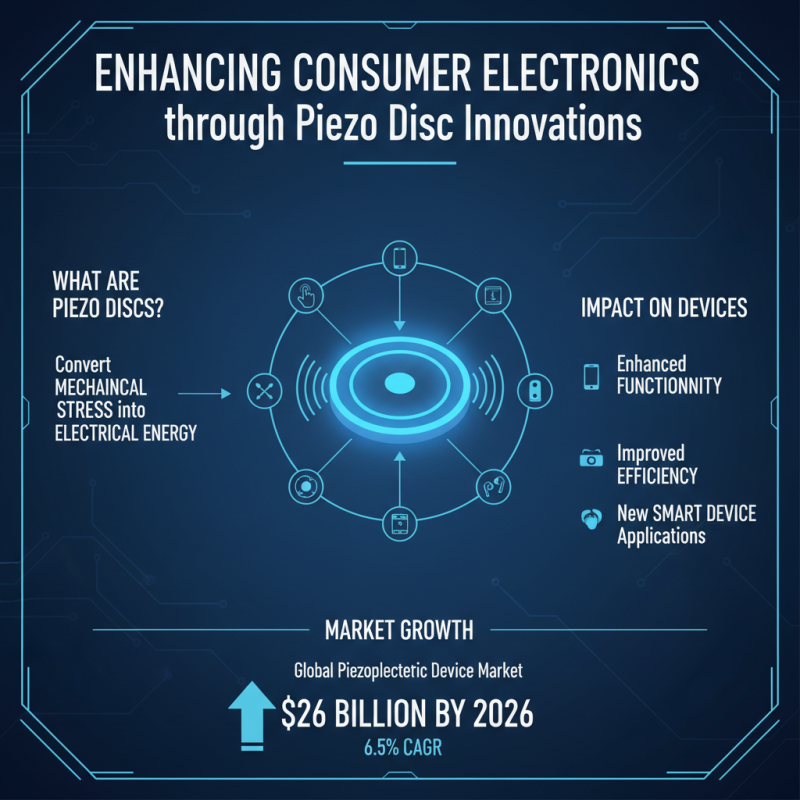
Enhancing Consumer Electronics through Piezo Disc Innovations
The integration of piezo disc transducer innovations is revolutionizing consumer electronics. Piezo discs convert mechanical stress into electrical energy. This capability enhances the functionality and efficiency of everyday devices. According to a recent study, the global piezoelectric device market is projected to reach $26 billion by 2026, with a compound annual growth rate (CAGR) of 6.5%. This growth indicates a vast potential for technology improvements in smart devices.
For instance, portable speakers are benefiting significantly from these innovations. The lightweight and compact nature of piezo discs allows for enhanced sound quality without compromising size. These transducers also enable energy-harvesting features in wearables. By using body movement to generate power, wearables can operate for extended periods without frequent charging. Additionally, the use of piezo discs in touch-sensitive interfaces opens new avenues for interactive designs in consumer products.
However, challenges do exist. The materials used in piezo discs must be durable to withstand repetitive strain. Moreover, the adoption of this technology needs cautious evaluation. The sensitivity of these devices can sometimes lead to false activations or decreased reliability. Ongoing research is essential to address these concerns and maximize the potential of piezoelectric technologies in enhancing consumer electronics.
Piezo Disc Transducers in Industrial Automation and Robotics
Piezo disc transducers are transforming industrial automation and robotics. These devices convert mechanical stress into electrical signals, enabling precision in various applications. In robotics, they enhance feedback mechanisms, ensuring movements are accurate. The global piezoelectric devices market is projected to reach $35 billion by 2024, emphasizing the trend in automation technologies.
Industry reports indicate that piezo disc transducers improve operational efficiency in manufacturing. For instance, in smart manufacturing, they monitor critical parameters like pressure and vibration. This real-time data reduces downtime. A study found that companies integrating these transducers saw a 25% increase in productivity. However, reliance on such technology can lead to over-automation, where human oversight is diminished.
Robotic applications are also benefiting from these innovations. They allow for more sensitive and responsive actions. Yet, the implementation of piezo disc transducers requires careful consideration of design and integration. A gap exists in sufficient training for operators handling these advanced tools. Addressing these issues will help companies fully realize the potential of piezo disc technology in industrial settings.
China Top 10 Uses for Piezo Disc Transducer Innovations in Technology
| Application |
Description |
Key Benefits |
Industry Impact |
| Vibration Sensors |
Used for monitoring machinery to prevent damage. |
Increased equipment lifespan, reduced downtime. |
Manufacturing, Energy |
| Ultrasonic Cleaning |
Used in cleaning delicate parts through cavitation. |
Thorough cleaning without damage. |
Automotive, Medical |
| Pressure Sensors |
Measure pressure changes in various systems. |
Accurate readings and improved safety. |
Aerospace, Oil & Gas |
| Energy Harvesting |
Collecting energy from vibrations or movements. |
Sustainable energy solutions, lower costs. |
Renewable Energy, Consumer Electronics |
| Actuators |
Convert electrical energy into mechanical motion. |
Precise control in automation systems. |
Robotics, Automation |
| Medical Devices |
Used in diagnostic equipment and treatment devices. |
Enhanced diagnostics and patient safety. |
Healthcare |
| Flow Meters |
Measure fluid flow rates in pipelines. |
Improved resource management. |
Water Treatment, Chemical |
| Smart Materials |
Materials that adapt based on external stimuli. |
Versatile applications in various industries. |
Textiles, Civil Engineering |
| Sound Generation |
Creating sound in alarms and notifications. |
Clear communication and alerts. |
Security, Gaming |
| Haptic Feedback |
Providing tactile feedback in devices. |
Enhanced user experience. |
Consumer Electronics, Virtual Reality |