Who Are the Top Piezo Technology Suppliers in China?
Who are the top Piezo Technology suppliers in China? The answer depends on the application, not just a company’s visibility online. Buyers may need piezoelectric ceramics, sensors, actuators, ultrasonic components, or custom assemblies. These products share a technology base, but their performance requirements differ. A supplier suited to precision positioning may not be the right choice for harsh-environment sensing.
This guide explains how to assess Chinese suppliers using practical signals: product range, manufacturing capability, material expertise, testing methods, and technical support. Look for clear specifications, such as operating temperature, displacement, capacitance, frequency response, and tolerances. Ask whether samples can be tested against your actual load and operating conditions. A polished catalogue helps, but it is not proof of production consistency. Request relevant quality documents and clarify which processes are performed in-house. Lead times and customization options matter, too, especially when a component must fit an existing assembly.
There is no single ranking that fits every buyer. Company scale, export experience, and application focus can change the shortlist. Some suppliers publish limited technical detail; that makes comparison harder and deserves follow-up rather than guesswork. This article outlines the supplier landscape and suggests questions for evaluating potential partners. It does not treat marketing claims as verified performance. Small differences matter. A few micrometers of movement or a shift in resonance can affect an entire assembly. Choose based on documented evidence, responsive engineering communication, and repeatable test results—not a name alone. Buyers should also confirm current product availability directly, since catalogues and capabilities can change. That step is easy to overlook. It is worth doing.
What Piezoelectric Technology Suppliers Provide
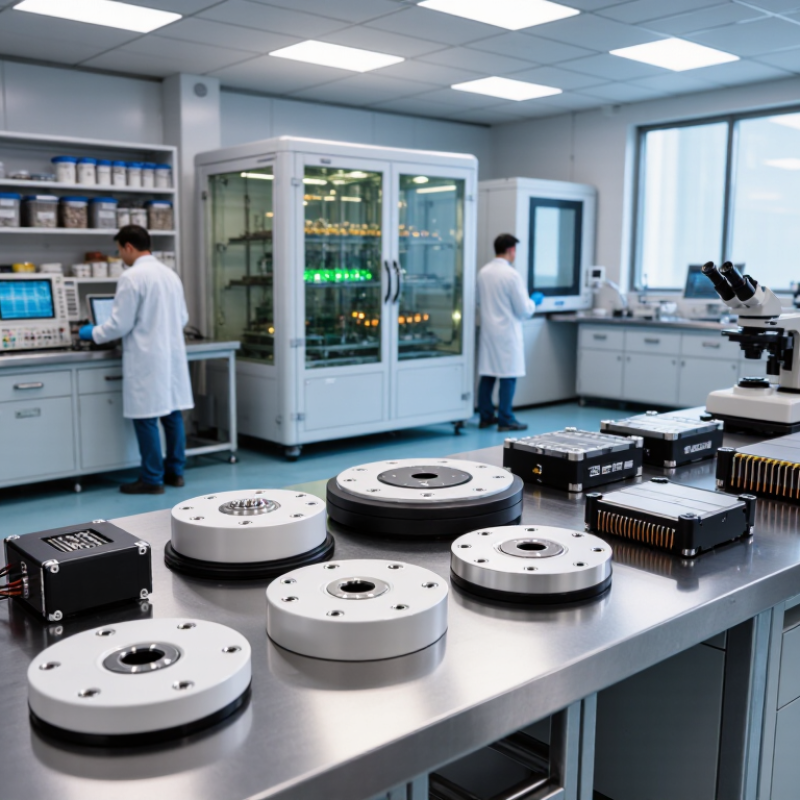
Chinese piezoelectric technology suppliers typically provide more than ceramic components. Their offerings may include piezoelectric ceramic discs, rings, stacks, sensors, actuators, transducers, and matched drive electronics. Some also support custom dimensions, electrode patterns, wiring, and assembly. These services help engineers fit components into pumps, precision stages, medical instruments, or ultrasonic cleaning heads. Small details matter.
Suppliers may also provide material selection, prototype builds, performance testing, and production quality checks. Ask for data on resonance frequency, displacement, capacitance, operating temperature, and batch consistency. Fortune Business Insights’ 2024 report estimates the global piezoelectric devices market at USD 31.68 billion in 2024, with projected growth to USD 47.90 billion by 2032. This forecast signals broad demand, but it does not prove that every supplier can meet a specific design. One specification is never the whole story.
Tips: Send suppliers a drawing, operating conditions, and target performance before requesting a quote. Ask for test results from the actual component type, not just a general catalogue sheet. Then compare samples under your own load and temperature conditions. Fit changes everything.
How to Evaluate Leading Piezo Suppliers in China
Who Are the Top Piezo Technology Suppliers in China?
How to Evaluate Leading Piezo Suppliers in China
Supplier evaluation should start with measurable performance, not a polished catalogue. Compare piezoelectric charge coefficient (d33), dielectric loss, resonance frequency, operating-temperature range, and batch-to-batch variation. Ask for test conditions, not just headline values. A d33 figure without its measurement method is hard to compare. Request sample parts, inspection records, and traceability from ceramic powder through final assembly. Grand View Research’s Piezoelectric Devices Market report valued the global market at USD 29.6 billion in 2023 and forecast 5.9% annual growth from 2024 to 2030. This signals broad demand, but does not prove any individual supplier’s quality.
Review how a supplier handles engineering changes, rejected batches, and production scaling. For a small actuator, check dimensions, electrode finish, and performance after repeated cycling. For sensors, examine signal stability under temperature and vibration changes. Ask whether test results represent routine production or a specially selected sample. Factory audits can clarify process control, though a visit alone cannot guarantee future consistency. Even experienced buyers sometimes overvalue low unit prices; tooling, yield, and delivery delays can change the real cost.
Tips: Send the same drawing and test protocol to each candidate. Compare results in a simple table, including tolerances and lead times. Keep one sample for independent testing. If a supplier avoids sharing test conditions, pause and investigate further.
Main Categories of Piezo Technology Suppliers
China’s piezo technology suppliers generally fall into several practical categories. Material specialists produce piezoceramic elements and related materials, often for buyers with in-house engineering teams. Component manufacturers turn these materials into discs, rings, plates, sensors, or actuators. Their capabilities may include shaping, electrode application, wiring, and basic testing. Ask what measurements are supplied with each batch, such as resonance frequency, capacitance, and dimensional tolerance. These details help engineers compare parts beyond price.
Another category is the finished-device or system supplier. These companies may combine piezo elements with housings, electronics, or control components for applications such as ultrasonic cleaning, flow measurement, and precision motion. Custom manufacturers can adapt geometry or wiring, while distributors may offer standard parts and shorter sourcing paths. Roles can overlap. A supplier might make components and assemble modules, but not every supplier controls every production step. That distinction is worth checking rather than assuming.
Tips: Share the operating frequency, temperature range, loading conditions, and expected service life when requesting a quotation. Ask for a sample, a test report, and clarification on inspection methods. Compare lead times and change-control practices, not just unit costs. Small details matter. A specification can look complete on paper yet leave room for interpretation, so document open questions before approving a design.
Profiles of Notable Piezo Suppliers in China
Who Are the Top Piezo Technology Suppliers in China?
Profiles of Notable Piezo Suppliers in China
China’s piezoelectric supply base includes several distinct supplier profiles. Some manufacturers focus on ceramic materials and pressed elements, managing formulation, firing, and inspection. Others specialize in finished transducers, including discs, rings, and probe assemblies. Engineering-led suppliers adapt dimensions, wiring, and mounting details for equipment makers. These categories overlap. A supplier’s label alone reveals little.
A materials-focused supplier may suit buyers who need consistent ceramic components and can handle later assembly. A transducer specialist can offer more integration, but its testing methods and design flexibility deserve close review. Engineering partners may help with prototypes, yet custom work can bring longer lead times. Ask for sample measurements, operating-temperature limits, and performance data under realistic conditions. Small differences matter.
Tips: Compare tolerances, test conditions, and sample results—not just quoted specifications. Ask how defects are tracked. Details can be uneven, even in a polished data sheet. Verify them before committing.
Industries Served by China's Piezoelectric Suppliers
China’s piezoelectric suppliers serve industries that need precise motion, vibration sensing, or ultrasonic energy. In medical equipment, piezoelectric transducers help form ultrasound images and support compact diagnostic probes. Their performance depends on stable frequency response and careful assembly. Small changes matter.
Industrial manufacturers use piezoelectric sensors to monitor vibration in pumps, motors, and production lines. Ultrasonic components also support material inspection, cleaning, and level measurement. In automation, compact piezo actuators can position parts with fine movement, such as adjusting an optical element or dispensing a measured drop of fluid. These applications call for repeatable output, not just a low quoted price.
Automotive and consumer-electronics makers use piezoelectric parts in sensing, sound generation, and haptic feedback. Aerospace and research applications may require tighter documentation and testing because operating conditions can be demanding. Buyers should ask about material consistency, frequency testing, temperature limits, and batch traceability. A supplier’s sample may perform well, while production batches vary. Still, a catalog rarely tells the whole story. It is sensible to test parts in the intended assembly and discuss failure criteria before scaling orders.