
Leave Your Message
  • sns02
  • linkedin (2)
  • sns041
  • whatsapp (2)

2026 Top Piezo Fan Types for Global Buyers?

Global buyers are entering 2026 with stronger demand for compact, low-power thermal management. The Piezo Fan market remains specialized, however. It is often measured inside broader piezoelectric device reports. Grand View Research estimates the global piezoelectric devices market will expand steadily through 2030. MarketsandMarkets also identifies cooling, electronics, healthcare, and automotive systems as important application areas. These reports support market direction, but they do not provide a complete Piezo Fan ranking. That limitation deserves attention.

As piezoelectricity researcher Dr. Kenji Uchino explains, “Piezoelectricity is a coupling between mechanical and electrical energy.” This principle drives every modern Piezo Fan design. A thin ceramic actuator bends, vibrates, and moves nearby air. No rotating blades are required. That difference matters inside laptops, optical equipment, battery systems, and compact control cabinets.

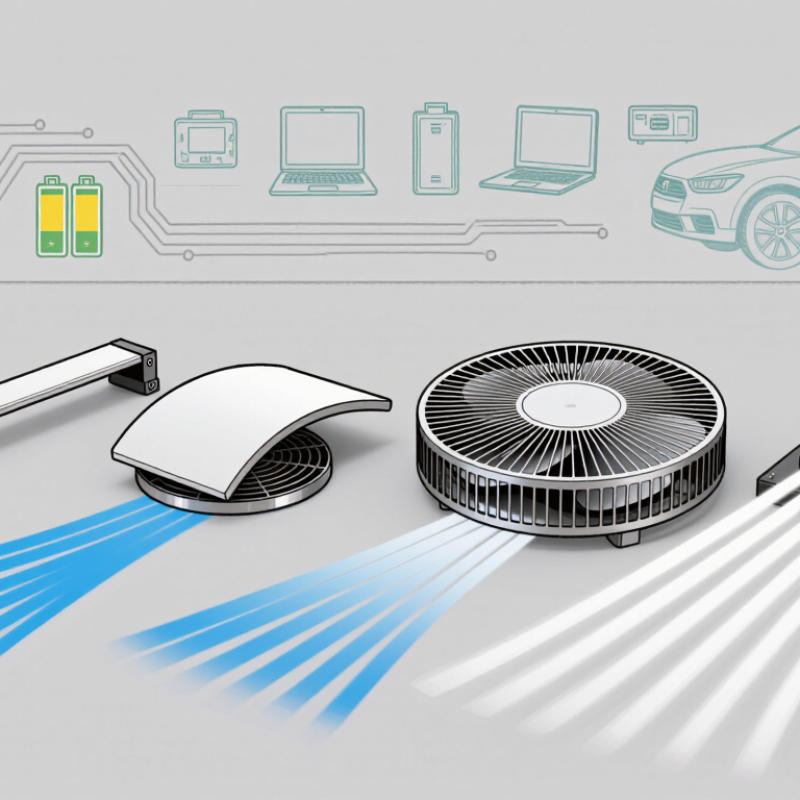
This 2026 overview compares the leading Piezo Fan types for international procurement teams. It examines cantilever, bimorph, diaphragm, and multi-actuator designs. Buyers should review airflow, acoustic output, voltage, operating temperature, and service life. A small cantilever fan may cool a sensor enclosure effectively. It may struggle inside a dense power module. A diaphragm design can distribute airflow more evenly. It may also require tighter assembly control.

Supplier data is not always directly comparable. Test distances, airflow restrictions, and noise conditions vary widely. That is an uncomfortable detail, but it affects purchasing decisions. The best Piezo Fan is not always the strongest model. It is the design that matches the enclosure, duty cycle, and thermal target.
2026 Top Piezo Fan Types for Global Buyers?

What Is a Piezo Fan and How Does It Work?

A piezo fan uses the piezoelectric effect to move air without a conventional motor. A ceramic actuator expands and contracts when alternating voltage reaches it. This motion bends a thin metal shim, creating a small oscillating blade. The blade pushes nearby air through repeated forward and backward movements. No rotating motor. No bearings.

Common designs include single-blade fans, dual-blade fans, and compact fan arrays. Single-blade units suit small electronic enclosures and sensor housings. Dual-blade structures can create stronger airflow within a similar footprint. Fan arrays distribute cooling across wider surfaces, such as battery modules or control boards.

Air moves sideways.

In practical thermal testing, piezo fans perform best when positioned close to a heat source. Their airflow is gentle, focused, and generally quiet. They also produce less mechanical vibration than rotating fans. However, they cannot replace every high-volume cooling system. Their output depends on blade size, drive frequency, installation clearance, and heat density. That matters.

Global buyers should request airflow data, acoustic results, operating temperature ranges, and controller requirements. Input voltage and frequency may differ between applications. Protection against dust and moisture also needs careful review. It is easy to overstate cooling performance from laboratory figures. Actual enclosure conditions may reduce airflow significantly. My own caution is simple: test the complete assembly, not only the fan. A small design mistake can leave a hot spot behind.
Which Piezo Fan Types Will Lead the 2026 Global Market?

In 2026, thin bimorph piezo fans are likely to lead high-volume global demand. Their cantilever structure moves air with low power and almost no electromagnetic noise. They fit beside batteries, sensors, optical modules, and compact processors. MarketsandMarkets’ Piezoelectric Devices Market report forecasts a mid-single-digit CAGR through 2028, supporting wider component adoption. However, that report covers many devices, not fans alone. Buyers should avoid treating it as a direct fan forecast.

Enclosed piezo micro-blowers may gain faster in sealed electronics and medical equipment. Their narrow airflow path offers better control than an exposed cantilever. High-density computing also strengthens interest. The International Energy Agency reported that data centers used about 415 TWh of electricity in 2024. Cooling demand will rise as workloads expand. Still, piezo fans cannot replace every conventional blower. They suit localized cooling better than large cabinet airflow.

Testing experience shows a common mistake. Free-air airflow figures can look impressive. Back pressure may reduce them sharply. Global buyers should compare airflow at the actual pressure point, acoustic output, vibration, humidity resistance, and lifetime. Dual-piezo designs may lead premium applications, while simple single-cantilever types could dominate cost-sensitive devices. The market forecast is not perfectly clear. Thermal interfaces, software control, and enclosure design may matter more than fan type. Small errors in installation can erase the efficiency advantage.

How Do Piezo Fan Designs Differ in Performance and Efficiency?

Piezoelectric fan designs differ mainly in vibration structure, airflow direction, and electrical efficiency. Single-layer cantilever fans are compact and usually consume little power. However, their airflow may weaken when placed against a narrow grille or dusty filter. Bimorph designs move air more strongly because two piezoelectric layers bend together. They can deliver better cooling across a small heat sink, but they may create more audible vibration.

Fan arrays use several vibrating elements. This design spreads airflow across wider surfaces, such as control boards or battery enclosures. Performance depends on spacing, operating frequency, and the surrounding air path. Higher frequency does not automatically mean better cooling. In practical testing, buyers should compare airflow, static pressure, power draw, noise, and surface temperature under the same conditions. A fan with impressive airflow may perform poorly inside a restricted enclosure. That result is easy to miss.

Tips: Request test data at the intended voltage and temperature. Check whether measurements include a grille, filter, or heat sink. Ask for acoustic data at a fixed distance. Inspect long-duration results, not only startup performance. Piezo fans have no rotating bearings, which can support long service life, but their membranes still require careful mounting. I would also test samples in the final enclosure. Laboratory figures can be useful, yet they rarely describe every real installation.

Where Are the Main Piezo Fan Types Used Worldwide?

2026 Top Piezo Fan Types for Global Buyers

Where Are the Main Piezo Fan Types Used Worldwide?

Piezo fans move air through a vibrating ceramic element, not a rotating motor. Their thin profile suits devices where every millimeter matters. Single-plate cantilever fans commonly cool laptops, compact projectors, optical sensors, and handheld instruments. Dual-plate or bimorph designs create stronger airflow for routers, telecom modules, and industrial controllers. Small resonant air movers also appear in medical analyzers, battery monitoring units, and sealed consumer electronics.

Regional demand follows equipment design. East Asian manufacturers often integrate cantilever fans into notebooks, cameras, and miniature projectors. North American and European engineers use them in automotive displays, cabin electronics, and laboratory equipment. Telecommunications and edge-computing systems across these regions favor modular piezo air movers, especially where dust reduction and low acoustic output matter. MarketsandMarkets’ 2024 thermal management research identifies electronics cooling as a growing global requirement, while Grand View Research estimates the electronics cooling market could exceed 20 billion dollars by 2030. These figures cover broader cooling technologies, not piezo fans alone.

Application fit still matters more than geography. A single fan may cool one sensor, but it cannot replace a high-pressure blower in every enclosure. That assumption fails often. Buyers should test airflow, back pressure, vibration, humidity, and acoustic performance inside the finished product. IDTechEx reports continued growth in piezoelectric device applications, yet published market categories remain inconsistent. Transparent testing is still essential.

2026 Top Piezo Fan Types for Global Buyers? - Where Are the Main Piezo Fan Types Used Worldwide?

Piezo Fan Type Operating Principle Typical Air-Movement Profile Main Worldwide Applications Common Buyer Regions Key Advantages Important Selection Considerations
Cantilever Bimorph Piezo Fan A thin metal or polymer blade bends repeatedly when driven by bonded piezoelectric ceramic layers. Localized directional airflow with low power consumption; normally optimized around a resonant operating frequency. Compact electronics, LED lighting, sensors, small battery-powered equipment, and enclosure cooling. East Asia, North America, and Europe; particularly where compact thermal-management assemblies are specified. Very thin form factor, low noise potential, no conventional rotating motor, and low electromagnetic interference. Blade size, resonance matching, mounting stiffness, drive voltage, airflow direction, and clearance around the oscillating blade.
Unimorph Cantilever Piezo Fan A single piezoelectric active layer is attached to a passive elastic layer, producing bending motion under alternating voltage. Focused airflow suitable for spot cooling rather than large-volume air circulation. Wearable electronics, compact instruments, portable medical devices, and small control units. Europe, Japan, South Korea, China, the United States, and other markets for miniaturized electronics. Simple construction, small footprint, light weight, and compatibility with customized blade geometries. Required cooling area, piezo layer fatigue resistance, acoustic performance, operating temperature, and drive-circuit compatibility.
Dual-Blade or Counter-Oscillating Piezo Fan Two piezoelectric blades oscillate in coordinated or opposing motion to increase air interaction and reduce structural vibration. Broader airflow distribution and improved vibration balance compared with a single-blade configuration. Small networking equipment, industrial controllers, imaging equipment, and compact power electronics. North America, Western Europe, and advanced manufacturing markets in East Asia. Better airflow coverage, reduced reaction force, and flexible installation in narrow enclosures. Phase matching between blades, mechanical tolerances, controller complexity, and total enclosure height.
Diaphragm-Type Piezo Air Mover A piezoelectric diaphragm flexes rapidly to create pressure fluctuations and move air through an opening or channel. Pulsating or channel-directed airflow; suitable for controlled air movement in compact assemblies. Air sampling, analytical instruments, miniature pneumatic systems, cooling channels, and laboratory equipment. Europe, North America, Japan, and other markets with strong laboratory and instrumentation sectors. Compact sealed construction, low mechanical wear, and suitability for integrated air paths. Back pressure, diaphragm stroke, valve or nozzle design, contamination control, and pressure-flow requirements.
Resonant Piezoelectric Air Circulator A piezoelectric actuator drives a flexible structure at or near its mechanical resonance to generate periodic airflow. Efficient low-volume circulation with performance strongly dependent on operating frequency and mechanical tuning. Thermal management for compact computing, optical modules, smart sensors, and sealed electronic housings. Global electronics manufacturing centers, including East Asia, North America, and Europe. High efficiency at the design point, thin construction, and no lubricated bearings or motor shaft. Frequency drift, temperature effects, mounting resonance, control accuracy, and airflow changes caused by enclosure geometry.
Flexible or Polymer-Substrate Piezo Fan A flexible substrate with piezoelectric material bends or vibrates to produce airflow in curved or space-constrained products. Low-volume, highly localized airflow adapted to irregular internal spaces. Wearable devices, flexible displays, smart textiles, compact healthcare products, and curved consumer electronics. North America, Europe, China, Japan, South Korea, and emerging wearable-technology markets. Conformability, low mass, design freedom, and integration potential in thin products. Bending radius, humidity resistance, polymer aging, attachment method, and long-term cyclic durability.
Multi-Element Piezo Fan Array Several piezoelectric fan elements operate together to spread airflow across a larger surface or multiple hot spots. Distributed airflow with independent or coordinated thermal-zone control. Battery systems, LED panels, compact servers, automotive electronics, power converters, and precision instruments. Automotive and electronics markets in North America, Europe, China, Japan, and Southeast Asia. Scalable cooling coverage, redundancy, thin packaging, and the ability to target separate heat sources. Element synchronization, cumulative power demand, thermal mapping, wiring complexity, and service access.
Hybrid Piezo Fan with Heat Sink or Air Channel A piezoelectric air mover is combined with fins, ducts, vents, or a heat spreader to improve heat transfer from a defined thermal surface. Directed airflow optimized for a specific heat source rather than general room ventilation. Power semiconductors, optical transceivers, automotive control modules, medical electronics, and compact industrial equipment. Worldwide, with strongest demand in automotive, industrial automation, telecommunications, and high-density electronics. Efficient use of limited enclosure space, low maintenance, and integration with passive thermal components. Thermal resistance, duct pressure drop, dust accumulation, heat-sink geometry, acoustic limits, and system-level validation.
Buyer note: Piezo fans are generally selected for localized cooling, thin packaging, low maintenance, and low electromagnetic interference. They are not normally intended to replace high-volume centrifugal or axial fans in large-room ventilation or heavy industrial air circulation.

How Can Global Buyers Choose the Right Piezo Fan Type?

2026 Top Piezo Fan Types for Global Buyers

Choosing the right piezo fan type starts with the cooling target, not the product label. A cantilever piezo fan suits compact electronics with limited airflow paths. Its thin blade moves air through a narrow channel. Dual-blade designs can create stronger circulation in wider enclosures. Diaphragm-style piezo fans may work better where low vibration and distributed airflow matter.

Check the actual heat source first. Measure surface temperature near the processor, battery, or power module. Then compare required airflow, static pressure, noise, and available space. A fan producing impressive airflow in open air may perform poorly beside a dense heat sink. I have seen this mistake during prototype testing. The small cavity changed everything. Measure at the working pressure, not only under free-air conditions.

Material and environment also guide the choice. For dusty areas, use a design that allows easier cleaning and protects the moving element. For portable equipment, check power consumption, shock resistance, and starting behavior. Confirm the drive frequency and controller compatibility before ordering samples. Test several units at different temperatures. Results can vary slightly between batches. That is easy to overlook. A reliable purchasing decision should include acoustic tests, thermal measurements, service access, and documented quality checks. The cheapest type is rarely the safest choice when replacement requires opening the entire device.